

Most NZ trades and field-service businesses should buy off-the-shelf job management software: it is proven, supported and costs far less to start than a custom build. Applicable builds custom field apps for the minority whose work runs offline, whose compliance records are trade-specific or whose quoting rules the subscription tools cannot express.
What off-the-shelf job management software does well
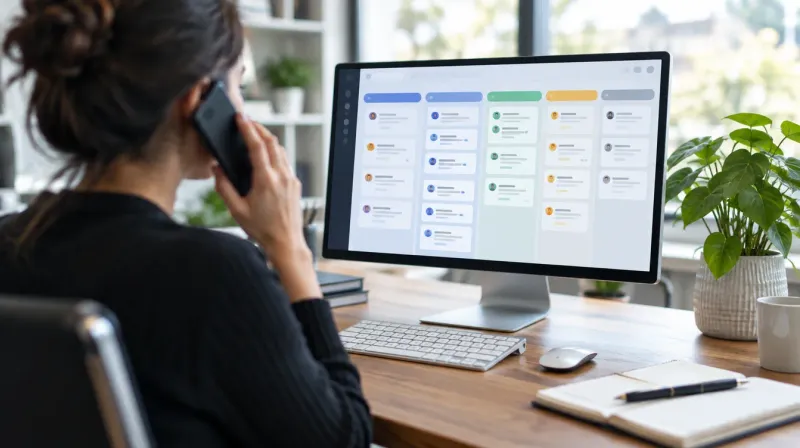
The subscription job management tools sold to NZ tradies cover the standard loop: a job comes in, someone quotes it, it goes on the schedule, a tech does the work, an invoice goes out and the accounting package picks it up. If your business runs on that loop, buy the tool. You get a mobile app on day one, a support desk, an accounting integration that somebody else maintains and a monthly fee you can cancel.
Be honest about what you are. A plumbing firm with six vans, standard jobs and a bookkeeper who lives in the accounting package is exactly who these products were designed for. A custom build would spend money solving a problem the market already solved.
Where the subscription tools run out
The trouble starts when your work does not fit the template. In our experience it is one of four things.
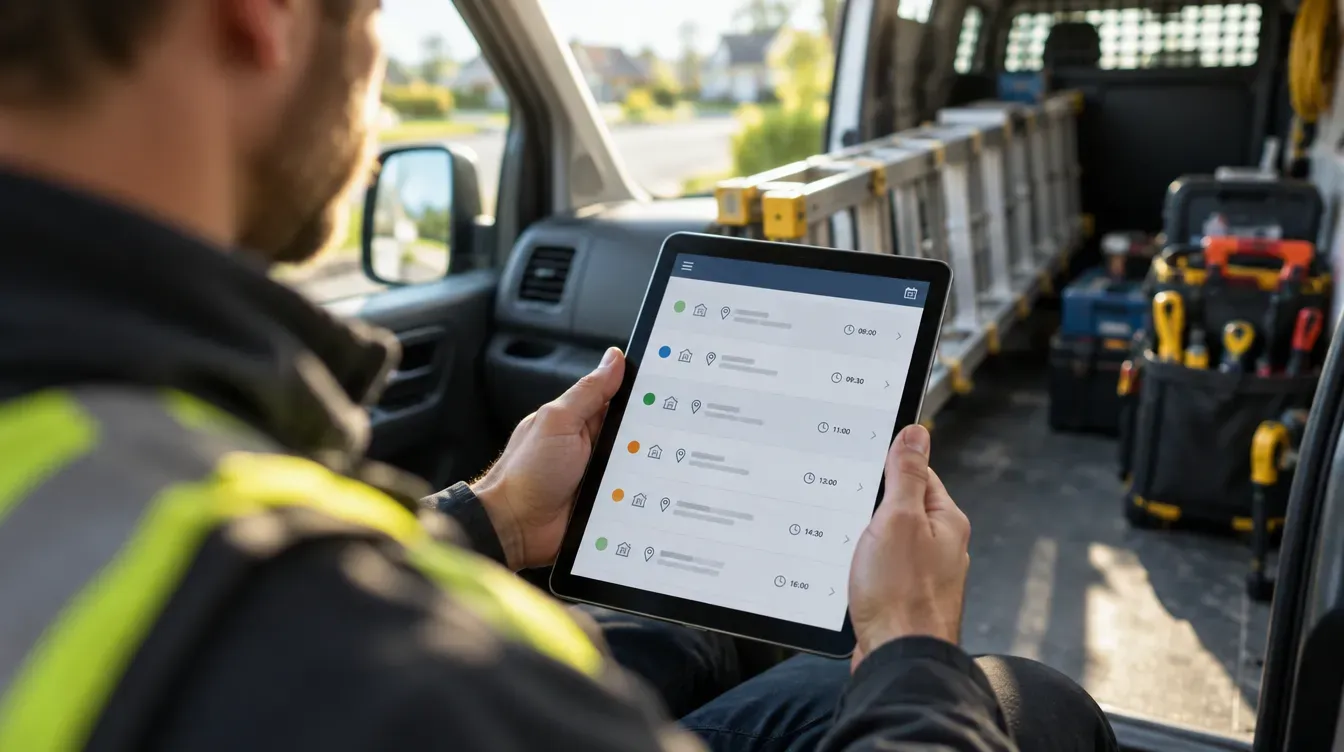
Offline field use. Basements, plant rooms, new builds without power, rural sites. Many subscription apps degrade badly without a signal: forms will not save, photos queue up and get lost, techs fall back to paper and re-key it at night. A field app has to be designed to work offline from the start, syncing up and down as connectivity allows. It is hard to bolt on later.
Compliance logs that are specific to your trade. Passive fire, electrical certification, permit-based transport work and similar trades keep records that an auditor or a building owner will ask for later. A generic "notes and photos" field is not a compliance record. You need the right fields, the right pass/fail states and reports that come out in the format the client or regulator expects.
Quoting and pricing rules. If your quote depends on a calculation, whether it is weights, materials, site conditions or a rate card that changes by client, the subscription tool's quote builder becomes a spreadsheet you keep beside it. The spreadsheet is where the real business logic lives, and it is undocumented.
Your process is the product. Some businesses win work because they do the job differently. Forcing that process into someone else's workflow flattens the advantage.
Comparison
| Off-the-shelf job management | Custom field app (Applicable) | |
|---|---|---|
| Upfront cost | Low; monthly subscription per user | Fixed-scope project; custom applications range up to around NZ$250,000, most SME builds well below that |
| Time to start | Days | Weeks to months, depending on scope |
| Offline field use | Varies; often limited | Designed in from the start |
| Compliance records | Generic fields | Your fields, your states, your report format |
| Quoting logic | Standard quote builder | Your rules, calculators included |
| Accounting integration | Included, maintained by vendor | Built to your package, maintained under retainer |
| Ownership | You rent it | You own the code and the data |
| Support | Vendor help desk | Senior team in Auckland who built it |
| What breaks | Vendor changes pricing or drops a feature | Nothing changes unless you ask for it |
When a custom field app is the right call
Build when at least one of these is true and it costs you real money every month:
- Your techs regularly work without a signal and the current tool loses data or forces paper.
- Your compliance reporting is specific enough that you are re-typing it into a template after each job.
- Your quote depends on a calculation nobody trusts the subscription tool to do.
- You have more than a handful of field staff and the workaround time adds up.
If none of those apply, buy the subscription and spend the money elsewhere. We have told prospective clients exactly that.
What Applicable has built for field work
Applicable built the passive fire compliance apps used by Firestop and Fire Report. Installers document new installation work and remedial work on a tablet, mark each item compliant, non-compliant or requiring engineering judgement, attach photos from the tablet camera, mark up building plans with pan and zoom and print labels with QR codes to a portable Bluetooth printer. The app works online and offline and syncs to a cloud back end that produces building compliance, billing and productivity reports. Fire Report is used by two major NZ universities and specialist firestop companies.
For transport, Applicable built the HPMV weights calculator, so operators can check load weights against permit requirements from the field. Both projects exist because no subscription product covered the compliance step properly.
A middle path
You do not have to choose one or the other. A common pattern is to keep the subscription tool for scheduling and invoicing and build the one piece it cannot do: an offline compliance form, a quoting calculator, a customer portal. Applicable scopes that as a fixed-price project and connects it to what you already run.
What it costs and how long
Applicable prices custom applications on a fixed scope. The old site published a bracket of up to around NZ$250,000 plus GST for custom applications, and most field apps for an SME sit well below the top of that range. A scoping call will give you a ballpark early, before you commit to anything.
Key takeaways
- Most NZ trades businesses with standard jobs and a bookkeeper should buy off-the-shelf job management software.
- The subscription tools run out at offline field use, trade-specific compliance records and quoting rules that live in a spreadsheet.
- Applicable built the Firestop and Fire Report passive fire apps: offline tablet forms, photo capture, plan markup, label printing and compliance reporting.
- Keeping the subscription tool and building only the piece it cannot do is often the right scope.
- Custom applications are priced on a fixed scope, with a ballpark given at the first scoping call.
Faq
Is custom job management software worth it for a small NZ trades business?
Usually not, if your jobs are standard and the subscription tool's mobile app works where your techs work. It becomes worth it when offline data loss, manual compliance reporting or a quoting spreadsheet is costing staff time every week. Applicable will tell you at the scoping call if a subscription is enough.
Can a custom field app work without mobile coverage?
Yes, if it is designed for it. Applicable's field apps are built to keep working offline, storing data locally and syncing up and down as connectivity allows. The Firestop and Fire Report apps operate in basements and on new-build sites this way.
Can a custom app connect to my accounting package?
Yes. Accounting integration is a normal part of scope for a job or quoting app. It is built to your package and maintained under a retainer so it keeps working when the package updates.
How long does a custom field app take to build?
Weeks to months depending on scope. Applicable's process runs listen, scope, build, support, with a prototype in front of your users before the full build so problems show up early.
Do I own the software Applicable builds?
Yes. You own the code and the hosting accounts. Changes are quoted in writing before they are built, and you are not locked in to Applicable for support.